You’re about to transform your garden into something special with walkways that actually work. These 30 ideas blend practical design with real beauty, and they won’t break your budget. From timeless brick patterns to modern concrete styles, you’ll find options that match your space perfectly. Plus, many use natural materials like flagstone and reclaimed wood for that rustic charm everyone loves. Let’s explore which pathway will make your outdoor space shine and keep maintenance simple.
Classic Brick Herringbone Pattern Pathway
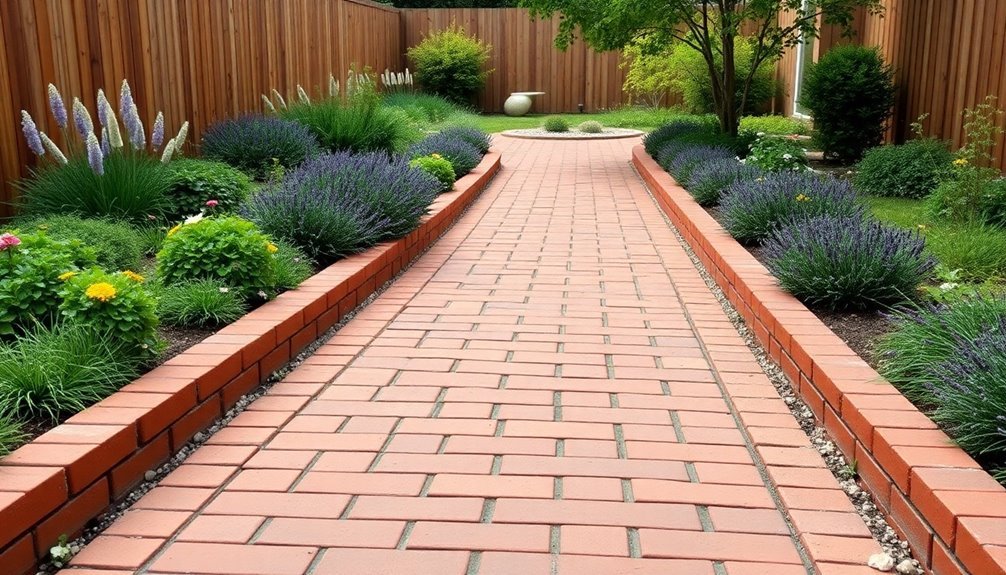
A brick herringbone pattern brings timeless elegance to any garden walkway. The distinctive V-shaped design creates visual interest while providing excellent stability and drainage. This classic layout works beautifully in both traditional and contemporary landscapes. The interlocking arrangement helps prevent shifting over time, and you can choose from various brick colors to complement your outdoor space. Installation requires careful attention to maintain the alternating pattern, but the striking results are well worth the effort.
Natural Flagstone With Moss-Filled Gaps
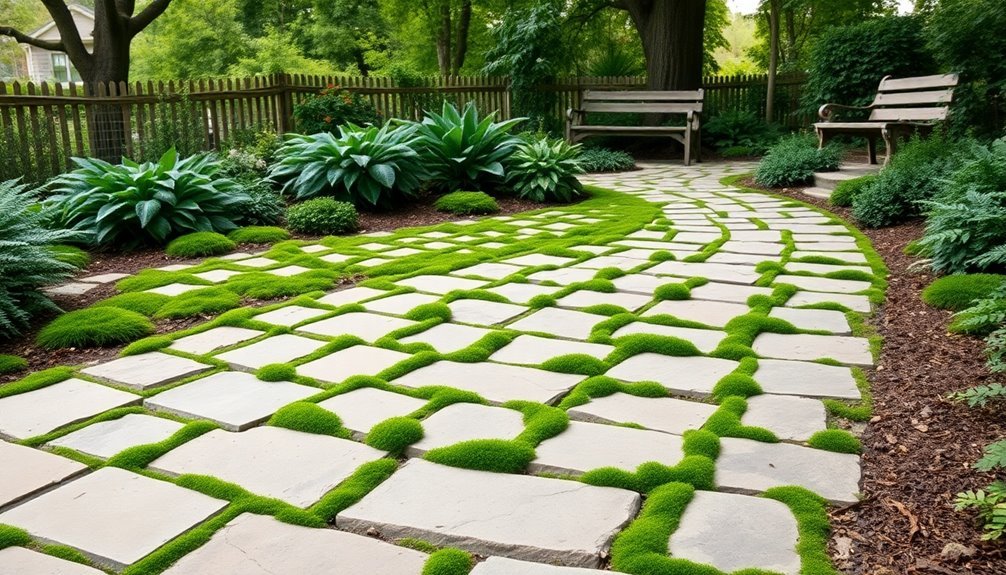
Natural flagstone creates an organic, cottage-style pathway that blends seamlessly with garden surroundings. The irregular shapes and earth-toned hues of flagstone pieces fit together like a natural puzzle, while soft moss growing between the gaps adds rustic charm and helps with drainage. This low-maintenance option works particularly well in shaded areas where moss thrives. The varied surface texture provides good traction, and the stones develop a beautiful patina over time that enhances their weathered, timeless appeal.
Pea Gravel Path With Wooden Edging
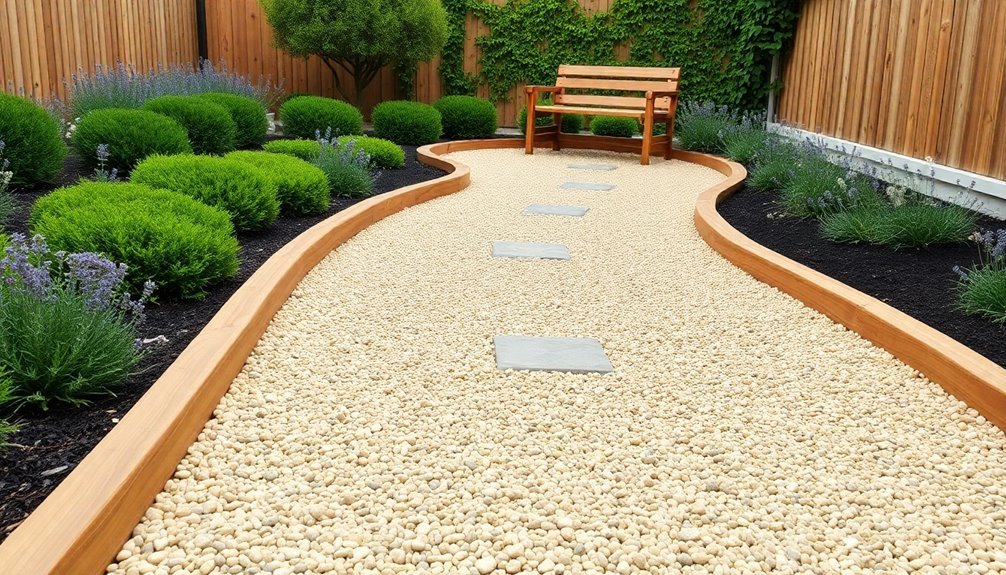
Pea gravel offers an affordable and versatile pathway solution that’s simple to install and maintain. The small, rounded stones create a pleasant crunching sound underfoot while providing excellent drainage. Wooden edging keeps the gravel contained and adds visual definition to the path, creating a clean border that separates the walkway from surrounding garden beds. This combination works well in both formal and informal garden settings, and you can easily refresh the look by adding more gravel as needed.
Stepping Stones Through Ground Cover Plants
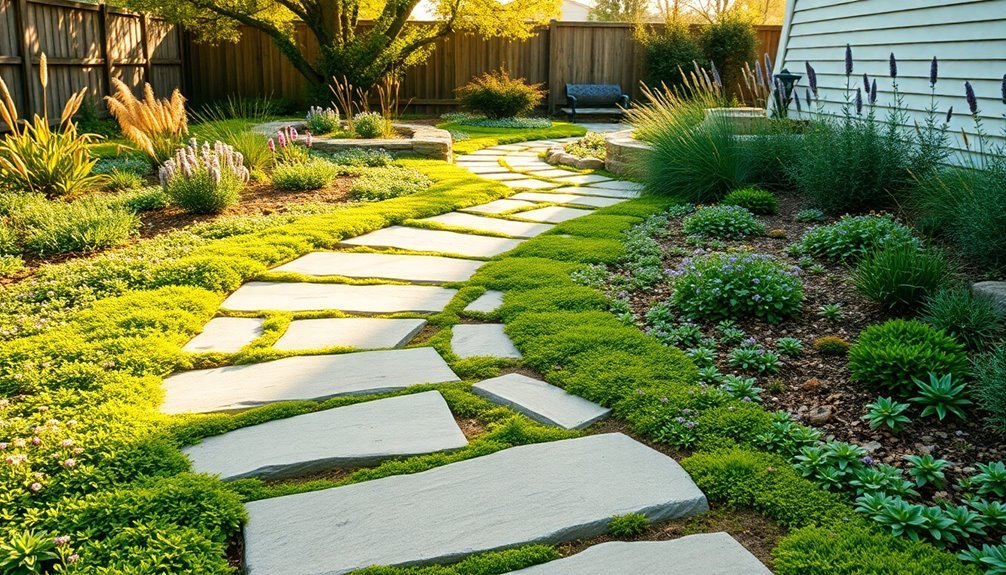
Stepping stones set within ground cover plants offer a charming, natural pathway that blends seamlessly into your garden landscape. This design allows low-growing plants like creeping thyme, sedum, or moss to fill the spaces between stones, softening the walkway’s appearance while reducing maintenance. The arrangement provides a practical walking surface without sacrificing planting space, and the ground cover helps suppress weeds naturally. Space stones according to your stride for comfortable walking, typically 18 to 24 inches apart.
Reclaimed Wood Plank Walkway
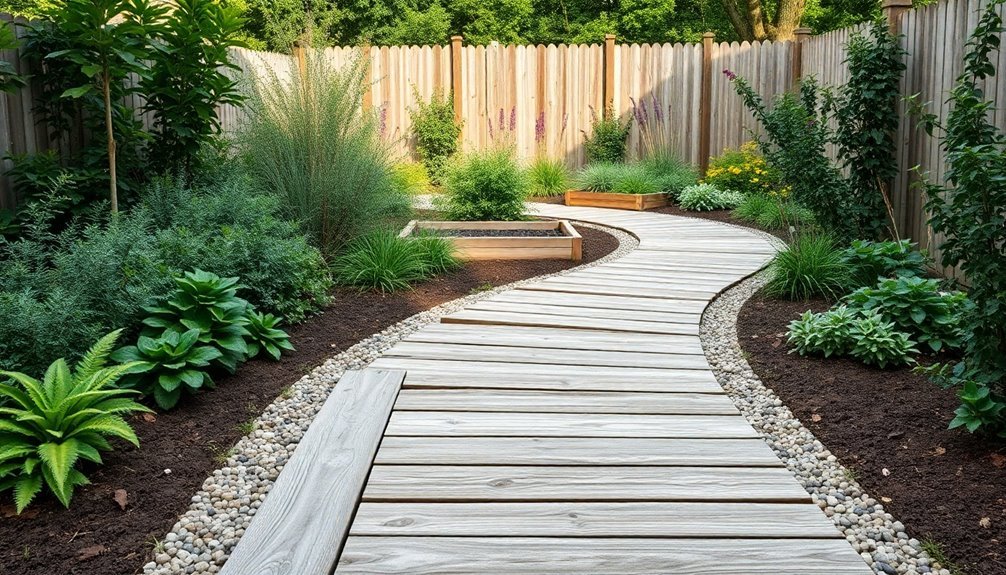
Reclaimed wood planks bring rustic character and warmth to garden pathways while supporting sustainable design principles. These weathered boards create a natural, cottage-style aesthetic that complements informal gardens beautifully. When installing, guarantee proper drainage underneath and treat the wood to extend its lifespan in outdoor conditions. The planks work particularly well in woodland gardens or alongside vegetable beds, and their width provides stable footing even in damp weather. Consider mixing plank widths for added visual interest.
Decomposed Granite for a Soft Desert Look
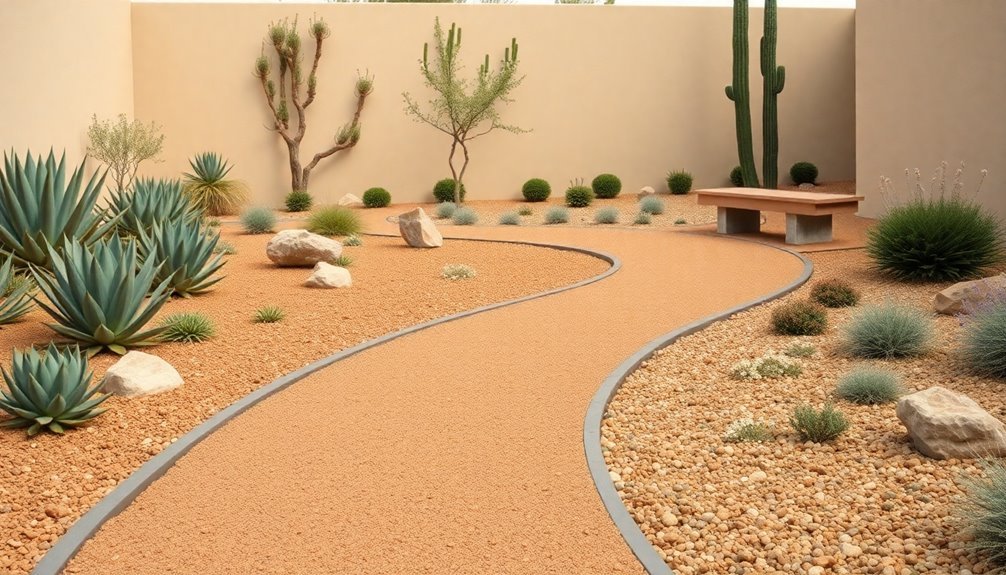
Decomposed granite offers an affordable, permeable surface that captures the relaxed feel of desert landscapes. This finely crushed rock compacts well underfoot while allowing water to drain naturally through the soil below. The material comes in warm earth tones from golden tan to reddish brown, creating a soft shift between planted areas. Installation requires edging to contain the material, and occasional replenishing maintains a tidy appearance. It pairs beautifully with drought-tolerant plantings and modern desert gardens.
Concrete Pavers in a Modern Grid Design
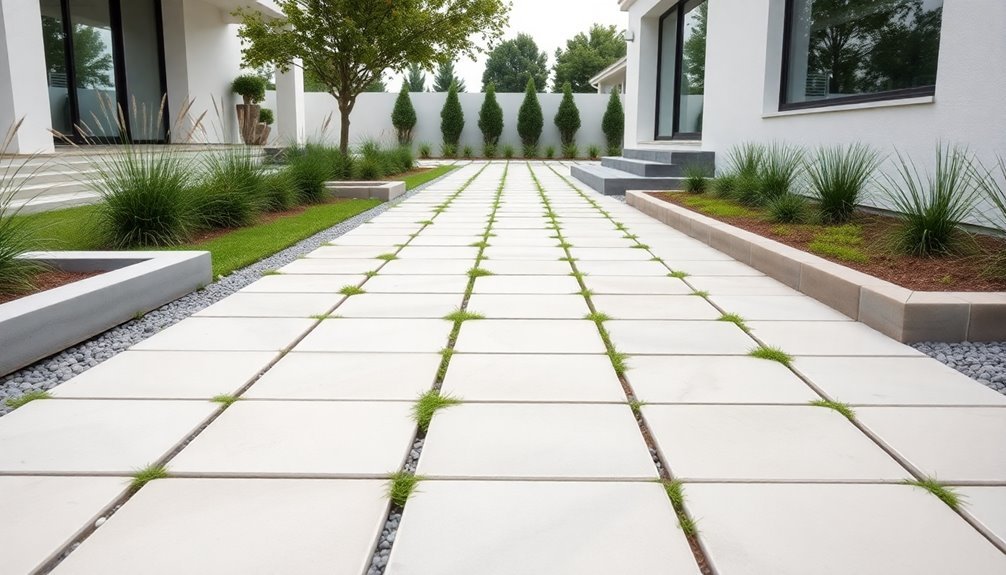
Concrete pavers arranged in a grid pattern bring clean, contemporary style to garden walkways. These uniform squares or rectangles create strong visual lines that complement modern architecture and minimalist landscaping. Spacing the pavers with gaps for low-growing ground cover or gravel softens the look while maintaining the geometric appeal. The design works well in both small courtyards and larger gardens, offering a crisp, organized pathway that’s easy to install and maintain over time.
Broken Concrete Mosaic (Urbanite) Path
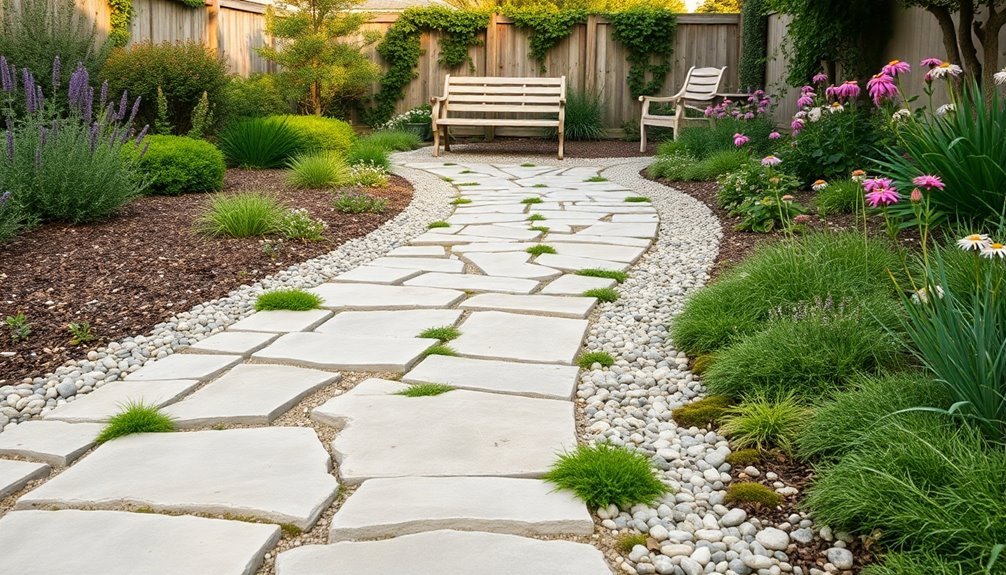
Broken concrete pieces, often called urbanite, offer an eco-friendly and budget-conscious pathway option. Salvaged from old patios or driveways, these irregular chunks fit together like a puzzle to create a charming, rustic mosaic. The varied shapes and weathered textures add character while keeping materials out of landfills. Filling joints with sand, soil, or gravel stabilizes the pieces and allows for creative patterns that work beautifully in cottage gardens and informal landscapes.
River Rock and Stone Combination
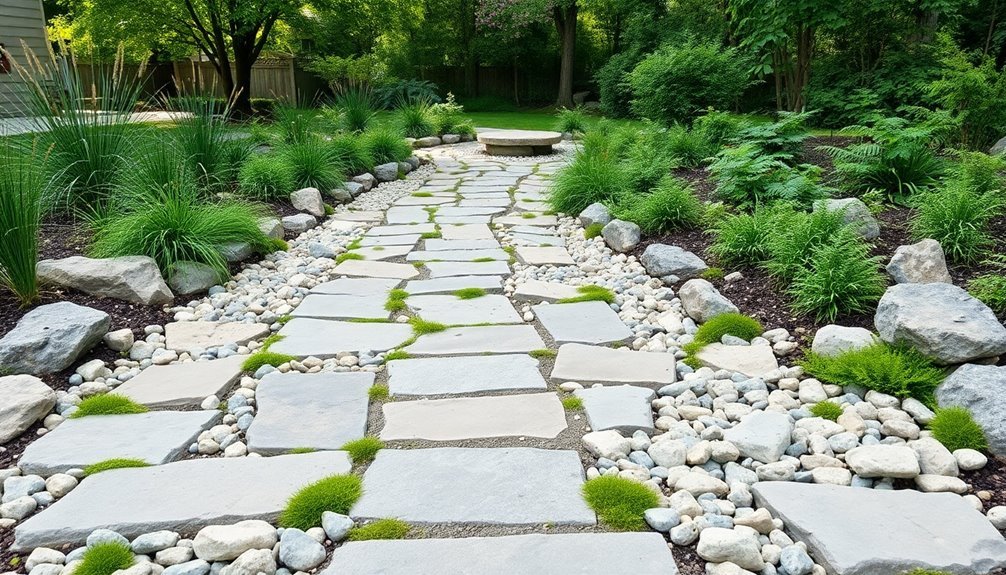
River rock and stone combinations create naturally elegant pathways with excellent drainage and minimal maintenance. Mixing smooth river rocks with larger flat stones provides both textural interest and stable footing. The stones can be arranged in flowing patterns that mimic streambeds, while smaller rocks fill gaps and prevent weed growth. This pairing works well in various garden styles, from zen-inspired spaces to woodland settings, and the neutral earth tones complement most plantings beautifully.
Mulch Path Bordered by Logs
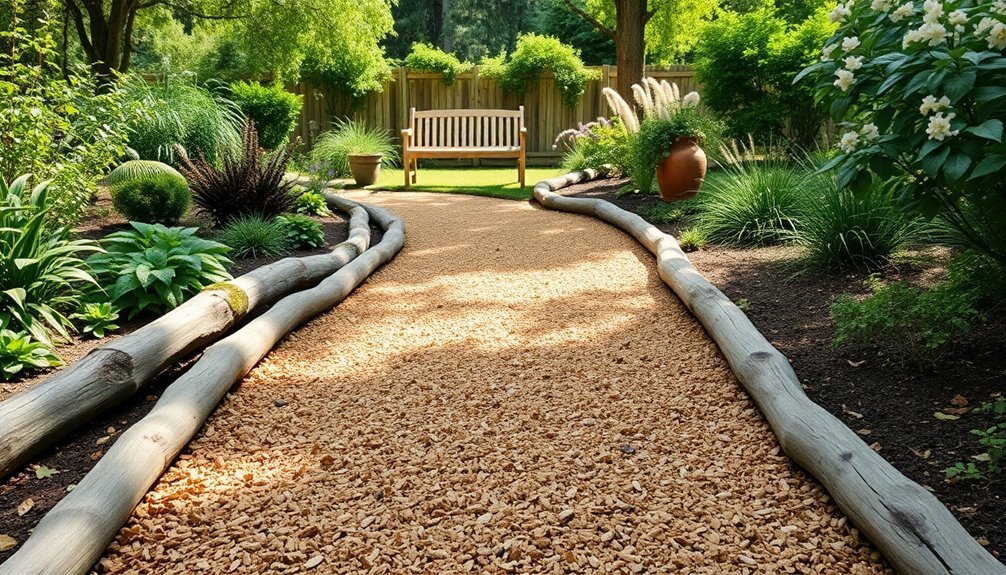
Mulch paths bordered by logs offer a rustic, budget-friendly walkway solution that blends seamlessly into natural garden settings. The log edging provides clear definition while keeping mulch contained, and the soft walking surface feels comfortable underfoot. Wood chips or shredded bark create a permeable path that allows water drainage and suppresses weeds naturally. This organic combination requires periodic mulch replenishment but remains one of the easiest pathways to install and maintain in informal garden designs.
Slate Tiles for an Elegant Finish
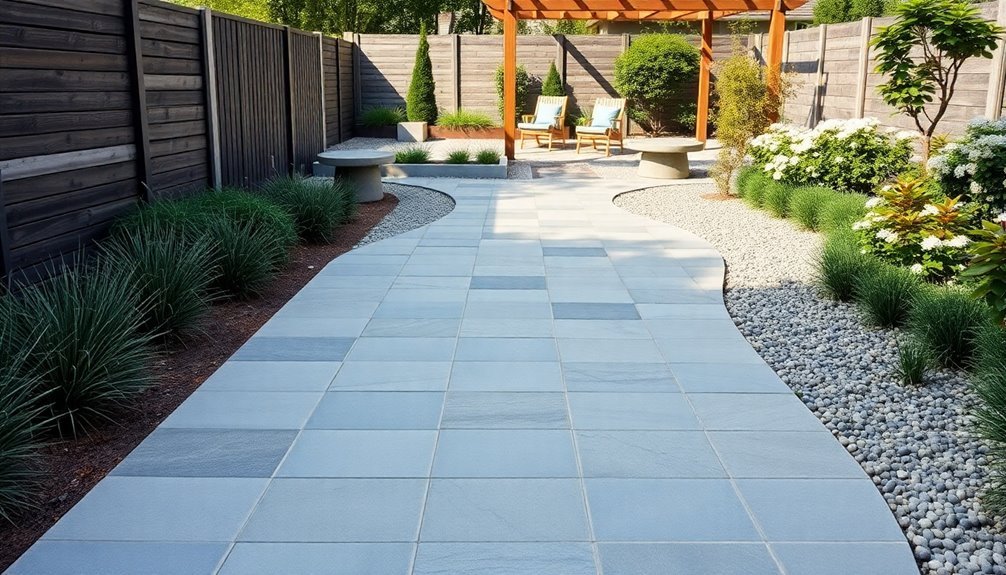
Slate tiles bring sophistication to garden pathways with their naturally elegant appearance and durability. Available in various shades of gray, blue, and green, these flat stones create a refined walking surface that complements both formal and contemporary garden designs. Their smooth texture provides stable footing, while the stone’s natural variations add visual interest. Slate resists weather damage and requires minimal maintenance, though proper installation with adequate base preparation guarantees longevity and prevents shifting over time.
Steppable Herb Pathway
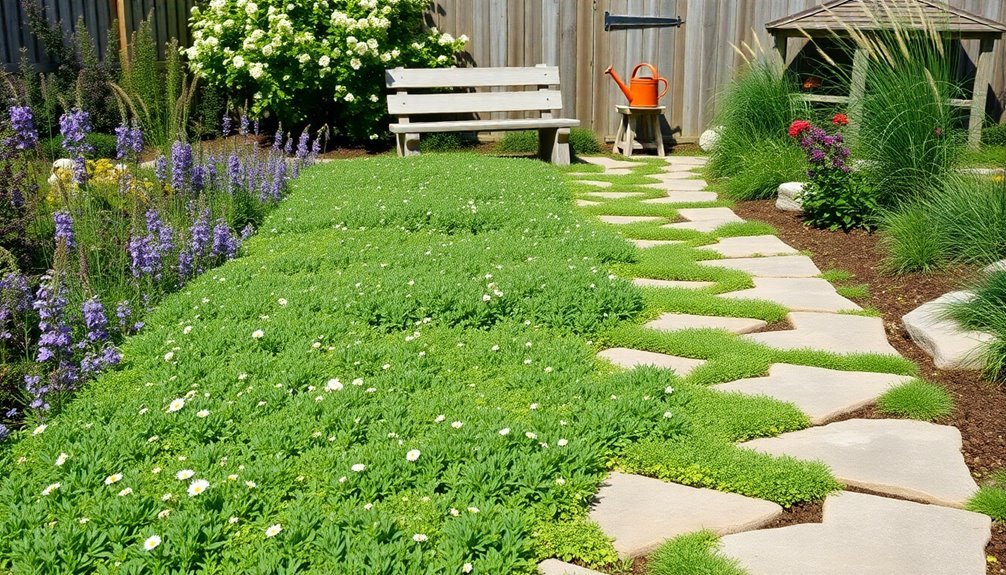
A steppable herb pathway combines function with sensory appeal by planting low-growing, fragrant herbs between stepping stones or pavers. Thyme, chamomile, and corsican mint work well as they tolerate foot traffic and release pleasant aromas when walked upon. These herbs fill gaps naturally, reducing weed growth while creating a soft, living carpet. This approach suits cottage gardens and informal landscapes, though herbs need adequate sunlight and occasional watering to thrive between stones.
Crushed Seashell Coastal Walk
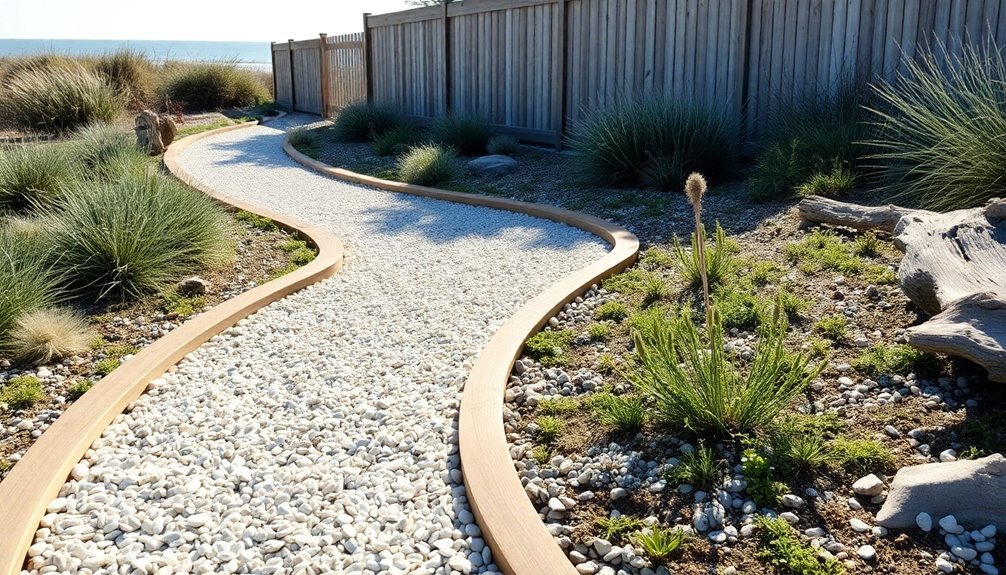
Crushed seashells create a charming coastal-inspired walkway that works especially well in beach properties or seaside gardens. The shells provide excellent drainage and reflect sunlight, which can benefit nearby plants. They create a pleasant crunching sound underfoot and naturally complement coastal landscaping. The pathway requires edging to keep shells contained and may need occasional replenishing as pieces break down. This option offers a casual, relaxed aesthetic while being relatively affordable and easy to install.
Hexagonal Concrete Molds With Grass
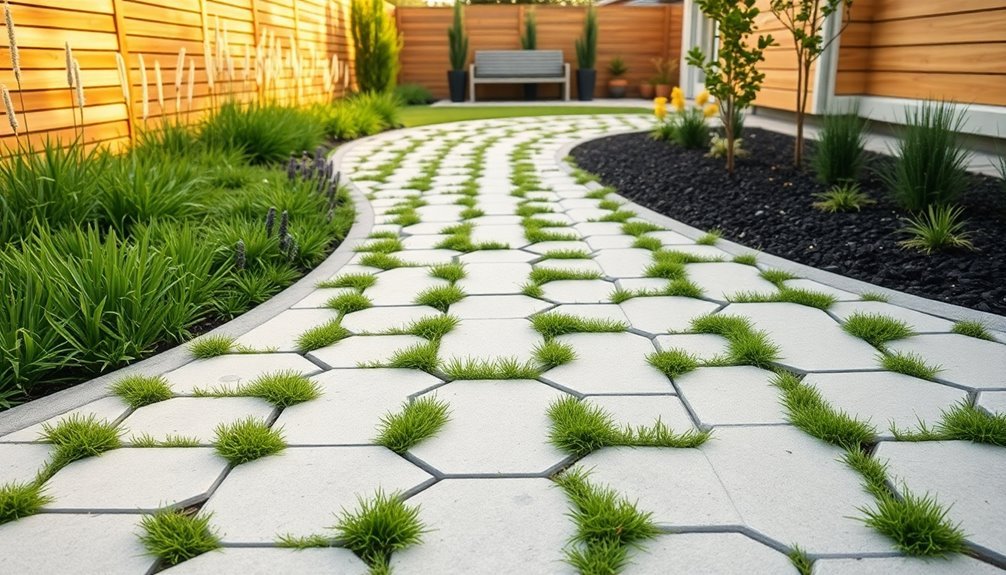
Hexagonal concrete molds create a modern geometric pattern that adds visual interest to garden pathways. These interlocking pavers can be arranged with grass growing between them, softening the hardscape while maintaining clear stepping surfaces. The design works well for both contemporary and traditional gardens, offering flexibility in layout patterns. Installation is straightforward as molds can be purchased affordably and filled on-site. The grass-filled gaps provide natural drainage and reduce heat absorption compared to solid concrete paths.
Salvaged Door Stepping Stones
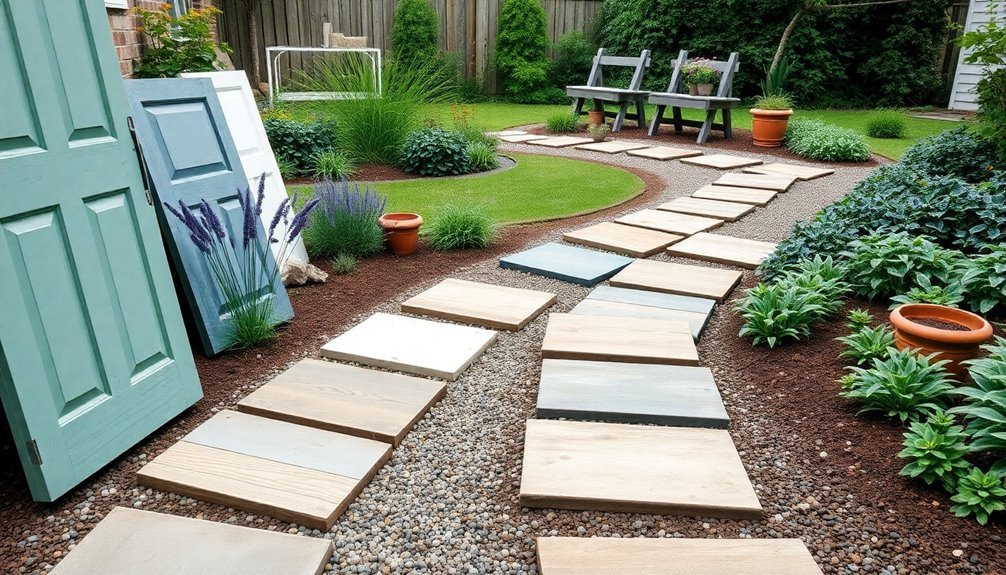
Salvaged doors offer an unexpected and characterful solution for garden stepping stones. Cut into sections or used as whole panels laid flat, old doors bring rustic charm and architectural interest to pathways. Wood doors work best when treated with weatherproof sealant to extend their lifespan outdoors. This upcycling approach gives new purpose to materials that might otherwise end up in landfills. The varied textures, colors, and panel designs create a unique pathway that serves as a conversation piece while being budget-friendly.
Circular Tree Slice Rounds
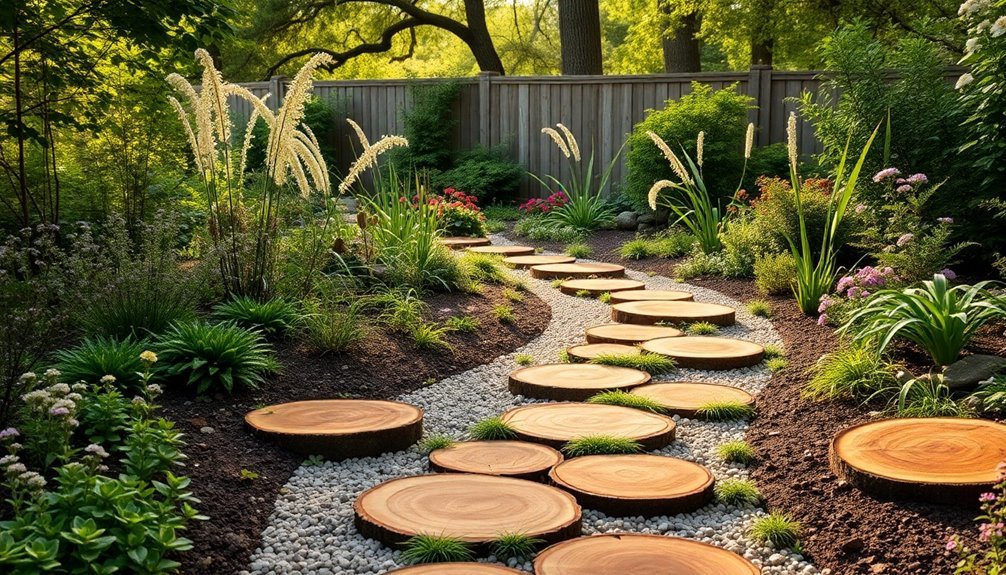
Circular tree slice rounds create a natural, woodland aesthetic for garden pathways. These thick cross-sections of tree trunks offer organic beauty with their exposed growth rings and varying diameters. When installed directly into soil or gravel, they provide stable stepping stones that blend seamlessly with surrounding greenery. Treating the wood with exterior sealant helps prevent rot and extends durability. This option works particularly well in informal cottage gardens or naturalized landscapes where an earthy, unpretentious look is desired.
Painted Concrete With Stenciled Designs
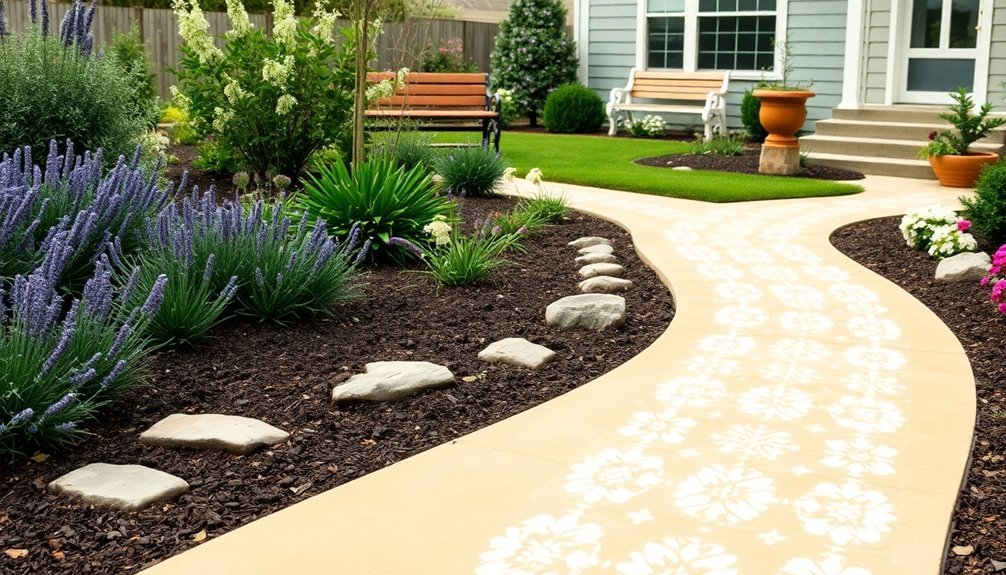
Painted concrete with stenciled designs transforms plain pathways into personalized artistic statements. This budget-friendly approach allows you to mimic the appearance of expensive materials like tile or stone through carefully applied patterns and colors. Concrete stencils come in geometric, floral, and traditional motifs that can complement any garden style. The surface accepts exterior paint readily and can be sealed for weather protection. This technique works especially well for updating existing concrete walkways or creating custom looks that coordinate with your home’s exterior.
Mixed Material Patchwork Path
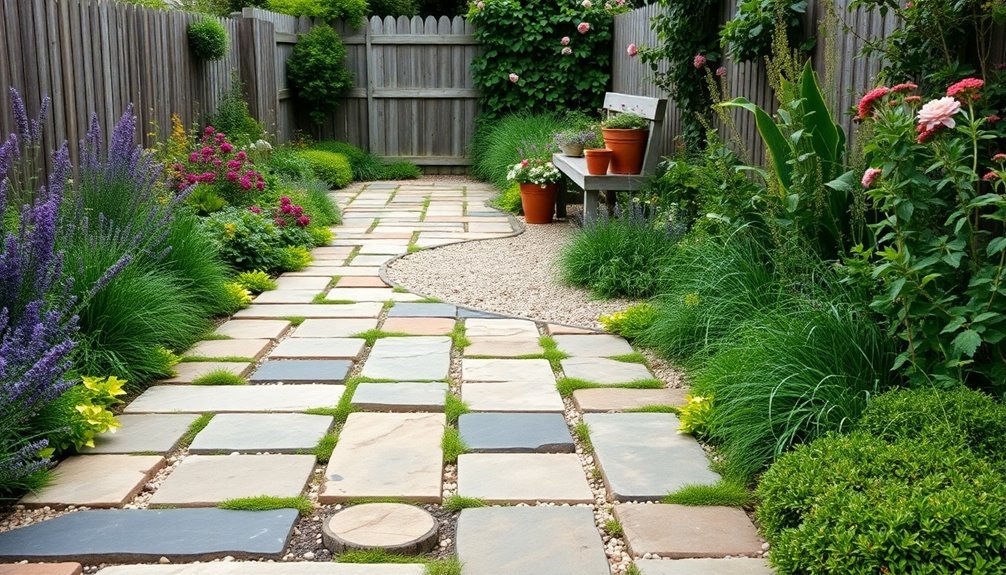
Mixed material patchwork paths combine different hardscaping elements like flagstone, brick, gravel, and wood rounds to create visually interesting walkways with distinct character. This approach lets you use leftover materials from other projects while achieving a cottage garden aesthetic. The varied textures and colors add depth to your landscape design. You can arrange materials in random patterns or organized sections, filling gaps with ground covers or small stones for a cohesive finished look.
Grass Pathway With Border Plantings
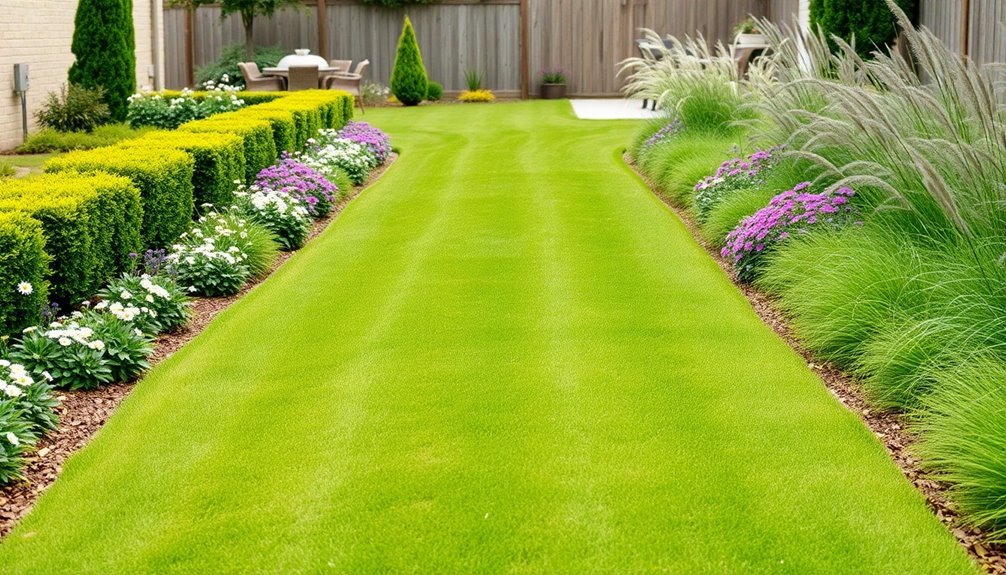
Grass pathways offer a soft, natural alternative to hard surfaces and blend seamlessly into your garden landscape. Simply mow a defined route through your lawn or establish a grass strip between planted beds. Border the edges with perennials, ornamental grasses, or low hedges to clearly define the walking area and prevent the path from disappearing into surrounding turf. This low-cost option works best in areas with moderate foot traffic and proper drainage.
Rubber Mulch for Cushioned Comfort
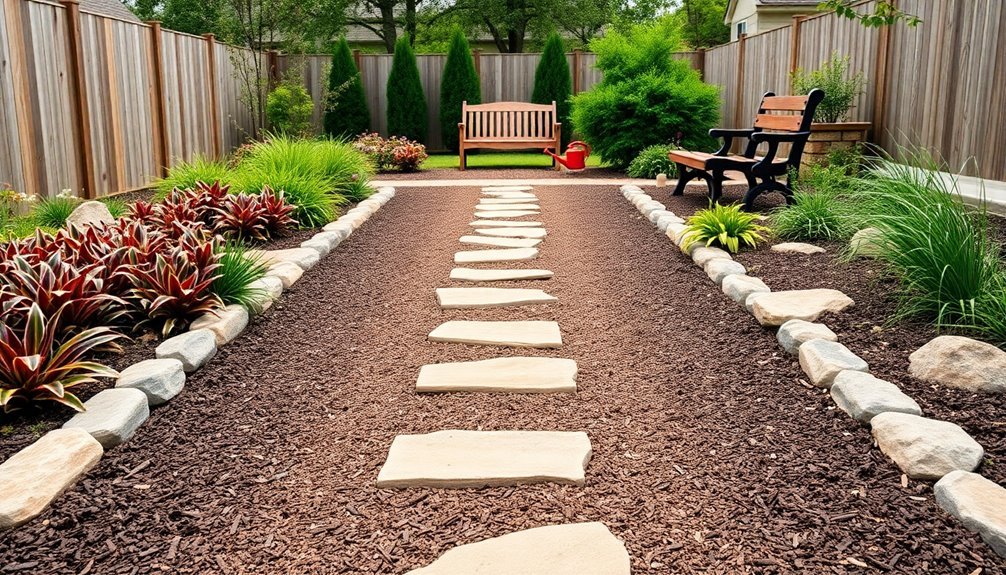
Rubber mulch provides a springy, comfortable surface that’s easy on joints and reduces impact from falls. Made from recycled tires, it’s available in various natural colors and won’t decompose like organic mulch. Install it over landscape fabric to prevent weed growth, laying it 2-3 inches deep for ideal cushioning. This option works well for high-traffic areas and family gardens, though it may retain heat in full sun and costs more upfront than traditional mulch.
Penny Round Mosaic Embedded in Concrete
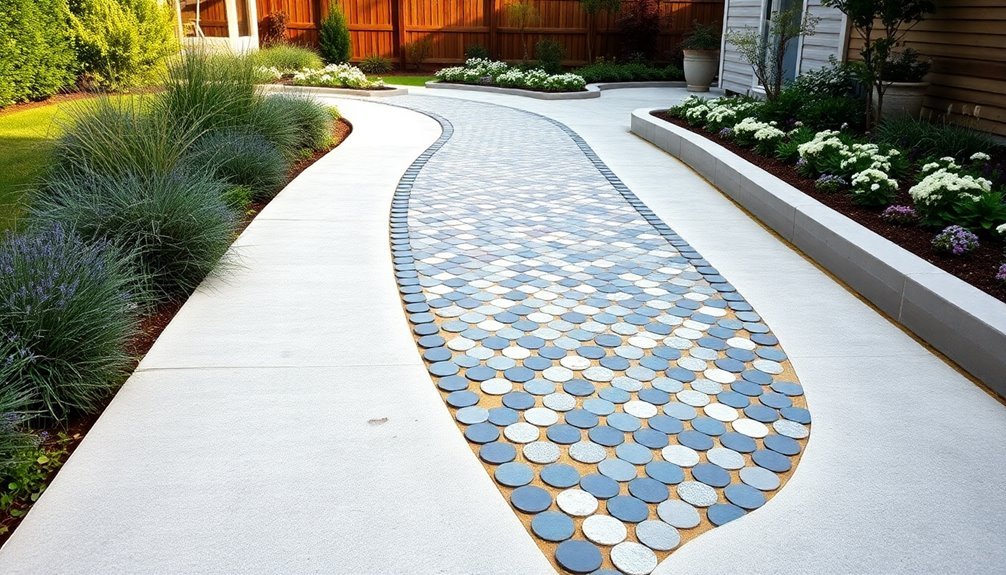
Penny round mosaic tiles create an eye-catching pattern when embedded into concrete walkways. These small circular tiles, typically measuring one to two inches in diameter, add texture and visual interest while maintaining a smooth walking surface. The tiles come in ceramic, porcelain, or glass varieties in numerous colors. Install them by pressing into fresh concrete or using thin-set mortar, then seal the surface to protect against moisture and staining for long-lasting beauty.
Railway Sleeper Timber Steps
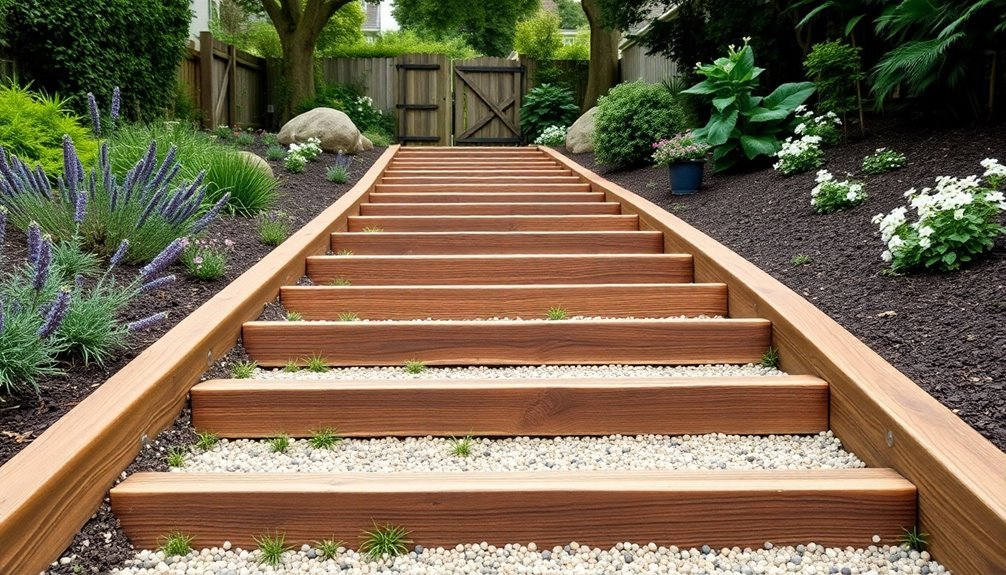
Railway sleeper timber steps provide a rustic, sturdy solution for sloped garden pathways. These thick wooden beams, originally used for railroad tracks, create natural-looking stairs that blend seamlessly with outdoor landscapes. Modern landscape suppliers offer new or reclaimed sleepers treated for ground contact and weather resistance. Stack them horizontally to form risers, securing with rebar or stakes driven through pre-drilled holes. Fill treads with gravel, mulch, or compact soil for stable footing. Their substantial size makes installation straightforward while delivering a charming, cottage-garden aesthetic.
Permeable Paver Grid System
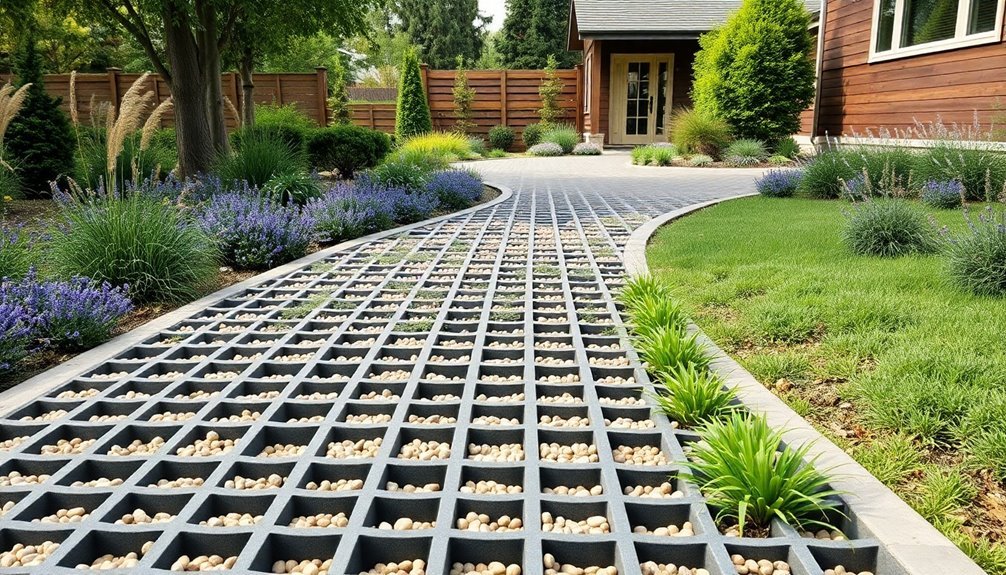
Permeable paver grid systems balance functionality with environmental responsibility for garden walkways. These interlocking plastic or concrete grids create a stable surface while allowing rainwater to drain naturally into the soil below. Fill the grid cells with gravel, grass, or groundcover plants to match your garden style. The system reduces runoff, prevents puddles, and supports healthy soil drainage. Installation involves leveling the base, laying the grids, and filling compartments. They work particularly well for driveways, parking areas, or high-traffic garden paths where drainage matters.
Sandstone Slabs With Wide Joints
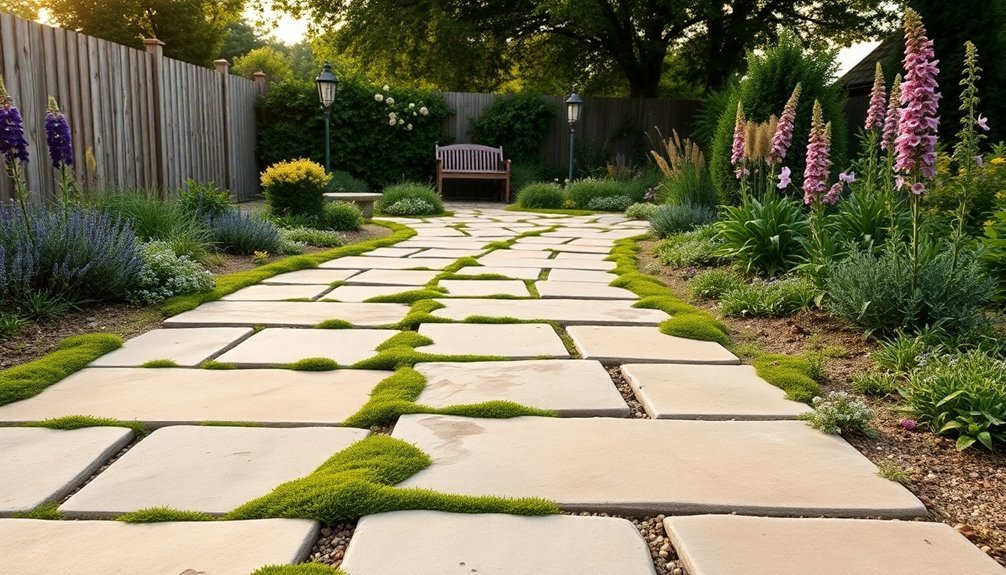
Sandstone slabs with wide joints create a relaxed, organic feel for garden walkways. Space these natural stone pieces several inches apart and fill the gaps with moss, creeping thyme, or fine gravel for visual interest. The wider spacing softens the path’s appearance and allows for better drainage than traditional tight-fitted pavers. This design works well in cottage gardens and informal landscapes. Choose slabs with irregular edges for a more natural look, or select cut pieces for cleaner lines while maintaining the airy spacing.
Glow-in-the-Dark Stone Accents
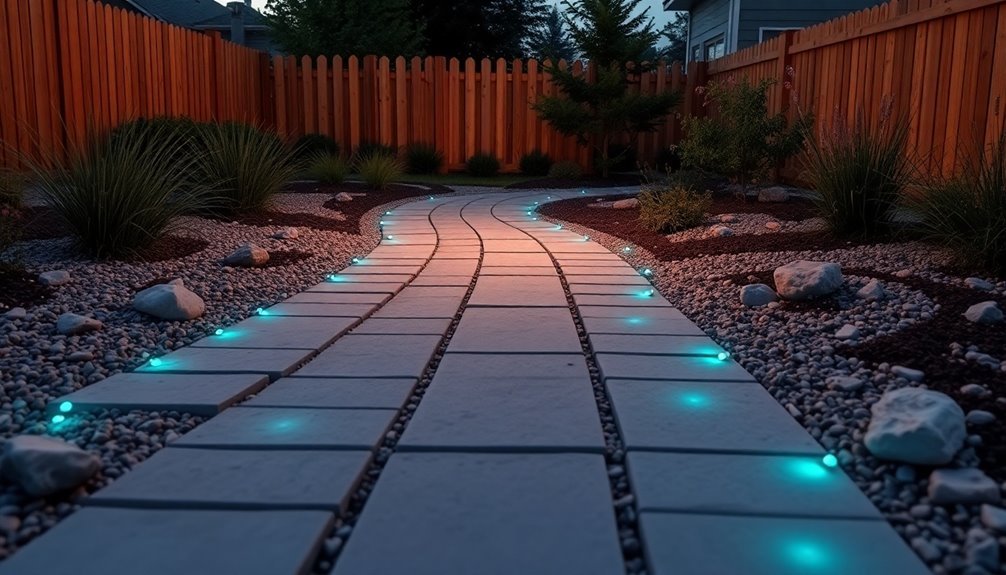
Glow-in-the-dark stone accents add enchanting nighttime visibility to garden paths without electricity. These photoluminescent materials absorb sunlight during the day and emit a soft glow after dark, creating a subtle lighting effect for several hours. Mix glowing pebbles between regular pavers, line pathway edges with luminous stones, or use them to highlight steps and curves. The effect works best in areas that receive direct sunlight and provides just enough illumination for safe navigation while maintaining your garden’s nighttime ambiance.
Repurposed Pallet Wood Sections
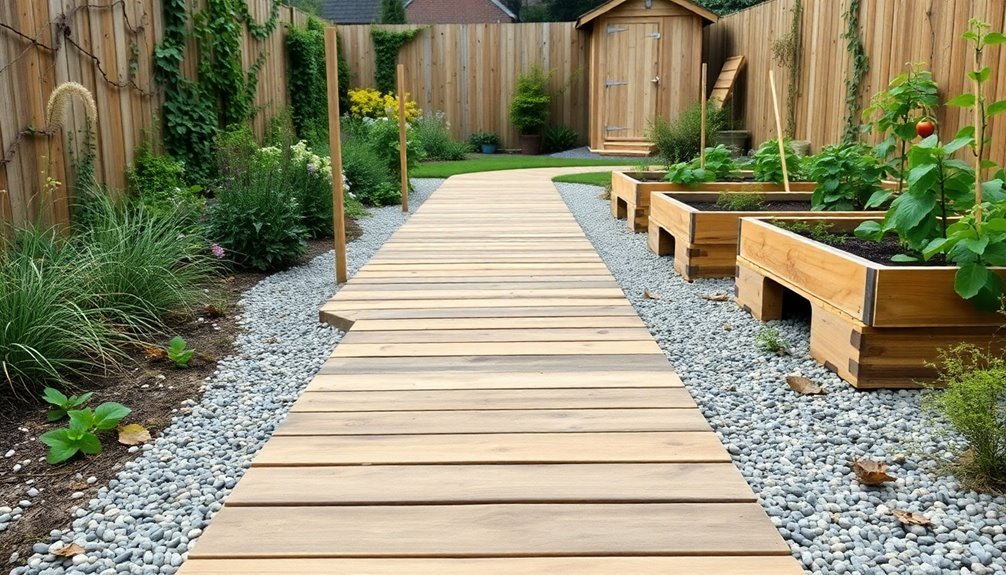
Repurposed pallet wood sections offer an affordable, rustic option for creating garden walkways with character. Cut pallets into manageable pieces and treat the wood with weatherproof sealant to extend its lifespan outdoors. Lay sections directly on level ground or set them in gravel for better drainage and stability. This approach works particularly well for informal garden areas and vegetable patches, providing a natural aesthetic that weathers beautifully over time while keeping your feet dry and mud-free.
Cobblestone European-Style Lane
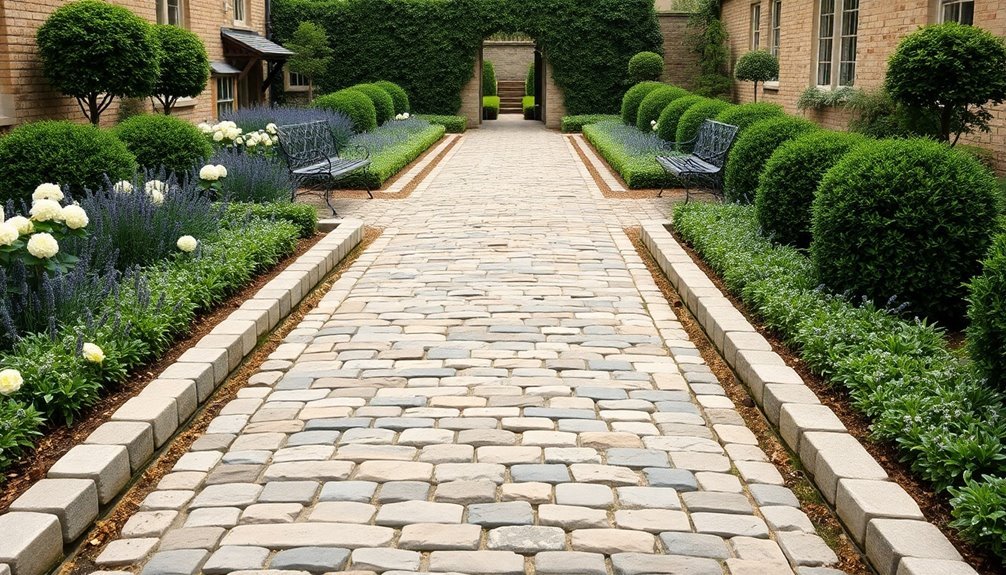
Cobblestone European-style lanes bring timeless elegance to garden pathways through their naturally varied textures and earth-toned colors. These rounded stones fit together like a puzzle, creating durable surfaces that improve with age. Installation requires a solid sand base and careful placement to guarantee stability and proper drainage. While more labor-intensive than other options, cobblestone walkways add significant visual appeal and can last for generations with minimal maintenance, making them ideal for formal garden settings.
Decorative Tile and Cement Fusion
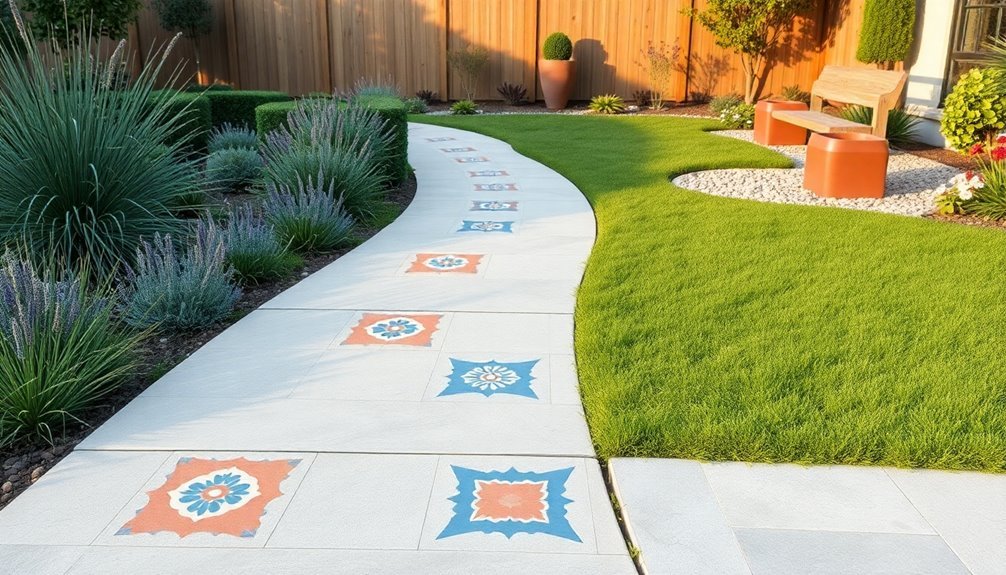
Decorative tile and cement fusion combines artistic flair with practical durability for garden walkways. This versatile approach allows you to mix colorful patterned tiles with smooth cement sections, creating custom designs that reflect your personal style. The cement provides structural support while tiles add visual interest through contrasting colors and textures. This method works well for both curved and straight paths, offering easy installation and maintenance. The combination resists weather damage and provides a stable walking surface that enhances any garden aesthetic.
Boardwalk-Style Elevated Planks
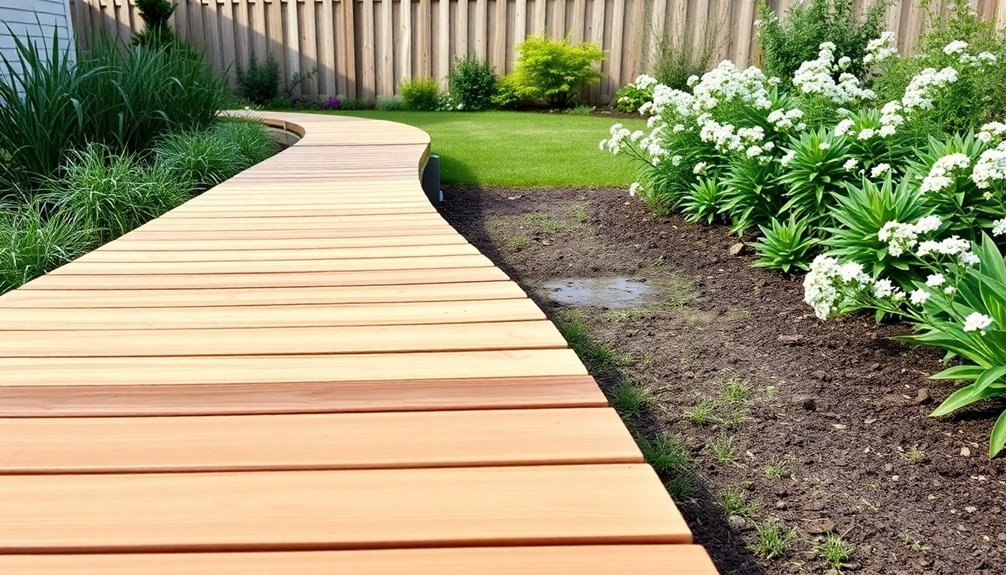
Boardwalk-style elevated planks bring a coastal charm to garden pathways while keeping your feet dry and comfortable. These raised wooden platforms sit above ground level, protecting the walkway from mud and moisture while allowing air circulation underneath. The design works particularly well in damp areas or gardens with drainage issues. Cedar or treated lumber provides longevity, and the natural wood texture complements surrounding greenery. The elevated structure also helps prevent weed growth beneath the pathway.
Volcanic Rock and Lava Stone Path
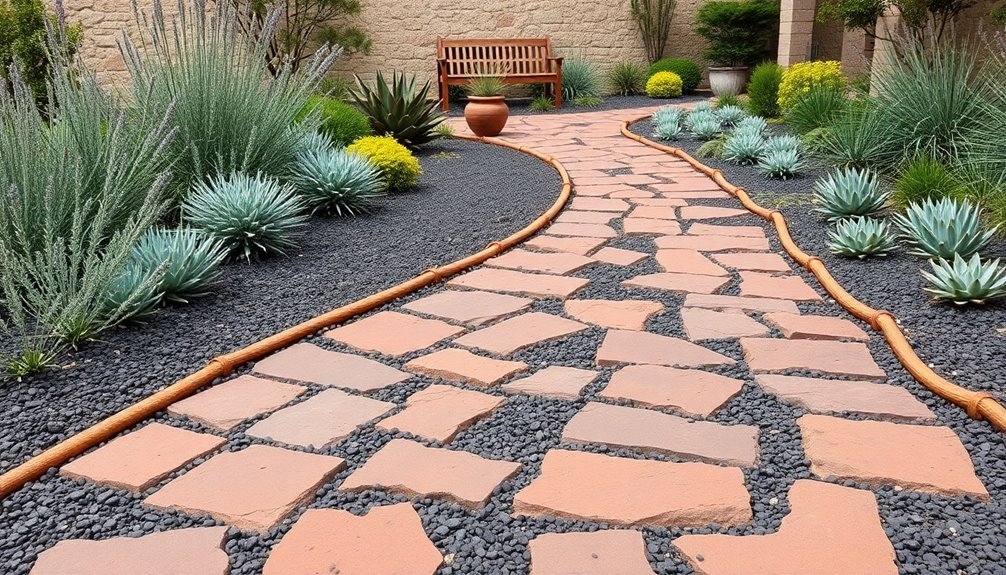
Volcanic rock and lava stone paths create striking garden walkways with their distinctive reddish-brown and black hues. These porous stones provide excellent drainage and prevent water pooling on the pathway. The rough texture offers natural slip resistance, making them practical for wet conditions. Lava stones retain heat during the day and release it slowly, which can benefit nearby plants. Their irregular shapes and earthy colors add a dramatic, natural aesthetic that works especially well in xeriscaped or Mediterranean-style gardens.
Conclusion
You’ve got plenty of walkway styles to choose from now. Pick the design that matches your garden’s vibe and your budget. Start with one simple path and see how it transforms your outdoor space. You’ll create better flow between garden areas plus boost your home’s curb appeal. Don’t wait for the perfect moment—grab your materials this weekend and let’s build something beautiful together.